Why Lemon Vibrators Work Better for Couples Navigating Midlife Transitions
When life shifts happen, so do your bodies and your connection. Here's what changes in midlife intimacy, and why lemon suction toys help couples find pleasure again together.
Let's be real. Midlife isn't one transition. It's five things happening at once. Your kids are launching (or you're grieving that they won't). Your career is demanding differently. Your body is answering to different rules. Your partner's body is too. And somewhere in the middle of all that, intimacy gets quiet.
That doesn't mean it's over. It means it needs permission to transform.
I work with couples in their 40s and 50s all the time, and I notice a pattern. The couples who navigate midlife intimacy best aren't the ones who pretend nothing changed. They're the ones who acknowledge the changes, adjust their expectations, and then give themselves real tools to reconnect. Lemon vibrators, specifically the suction design, show up again and again in that third part.
Three biological realities change how intimacy feels for both partners. Understanding these is half the battle.
First: hormonal rhythms stabilize but become gentler. For people with vulvas, estrogen drops, which changes tissue sensitivity and lubrication. For people with penises, testosterone tapers gradually, which can mean arousal takes longer, erections feel different, and recovery time stretches. Neither is a problem. Both are information.
Second: bodies accumulate experience and, sometimes, pain. A history of back issues, pelvic floor tension, or joint wear means certain positions stop working. Spontaneous sex becomes harder to initiate when you're thinking about whether your knee will cooperate.
Third: life noise gets louder. Aging parents, financial pressure, career anxiety. Your brain is holding more. Arousal, which always requires mental space, becomes harder to access on demand.
Here's what doesn't change: your capacity for pleasure. Your ability to orgasm. Your desire to feel close to your partner. That's still there. It's just operating under different conditions.
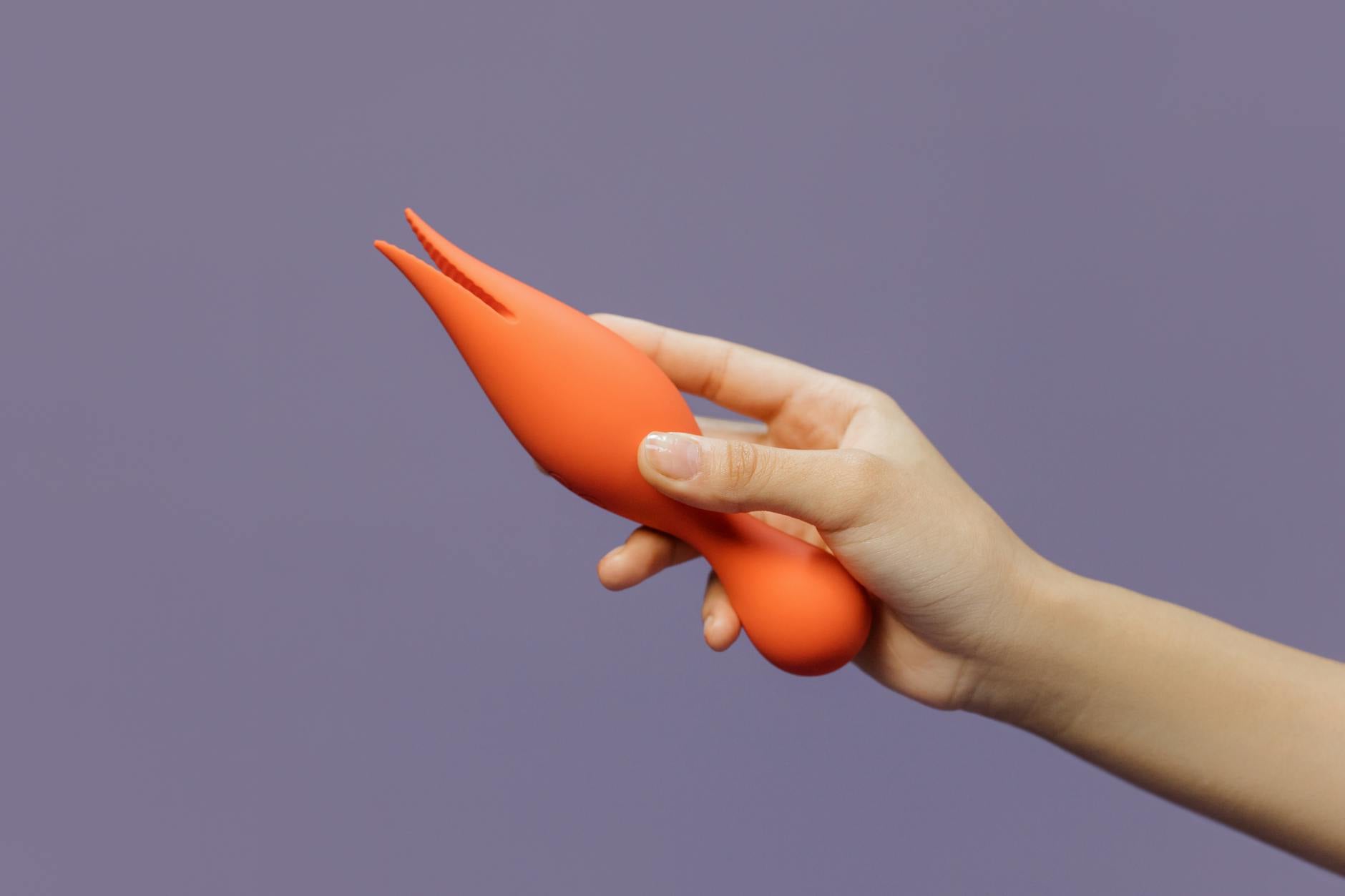
I recommend lemon clitoral vibrators, including the Lem vibrator and other hello nancy designs, to couples in transition for three specific reasons.
First, they're not about quantity of stimulation. They're about quality. Traditional vibrators rely on rapid vibration, which demands a certain level of engagement from your nervous system. After 40, 50, or beyond, many people find gentler pressure more sustainable. Lemon suction toys work through negative pressure rather than friction, which feels less intense on thinner or more sensitive tissue and doesn't create fatigue the way prolonged vibration can. You can use them longer without overstimulation.
Second, they change the dynamic with a partner. When you're exploring lemon adult toys together, you're not just adding an object to what you already do. You're creating a shared moment of learning. You're both figuring out a new sensation. That removes the performance pressure that often kills midlife intimacy. Nobody has to be the expert. You're collaborating.
Third, they solve the timing problem. Because suction stimulation is efficient and feels good faster than traditional vibration for many people, foreplay gets shorter without feeling rushed. That matters when you've got limited energy, aging bodies, or a 15-minute window before one of you falls asleep. Lemon sexual toys compress the pathway to pleasure without compressing the pleasure itself.
Here's what I see over and over in my office. Couples come in saying "the spark is gone." What they often mean is "we're not touching in the same way, and we're both scared to bring it up."
Midlife intimacy crisis is usually not actually about desire. It's about shame, exhaustion, and assumption. You assume your body doesn't work the way it used to. You assume your partner isn't interested anymore. You assume it's easier to let it go than to ask for what you need. None of those assumptions are usually true.
When you and a partner explore a lemon vibrator together, something shifts. You're not trying to fix what's "broken." You're choosing to try something new. Together. That distinction matters for your nervous system.
The couples I work with who use lemon suction toys report that they talk more about pleasure afterwards. They ask questions. They name what felt good. They plan to do it again. That conversation momentum carries forward into other areas of intimacy.
Four things I tell couples when they're starting this conversation.
Schedule it. I know that sounds unromantic. It's actually the opposite. When you both know Wednesday night is the night you're trying something new, you can mentally prepare. You can be curious instead of reactive. Spontaneity is overrated in midlife. Intentionality works better.
Start with lower intensity. If you're trying a lem vibrator or any lemon clitoral vibrator for the first time together, begin on pattern 1 or 2. See how it feels. This isn't a sprint. Exploring together means going slower than you might alone.
Separate the conversation from the experience. This is crucial. The chat about "we should try something new for us" is different from the moment of using a lemon sexual toy. Don't collapse them. Have the conversation earlier in the day or week. Then, when you're in the moment, you're already agreed. You're not negotiating in real time.
Ask what worked and what didn't. Afterwards, not during. Give it five minutes, and then say "what did you like about that?" This isn't a test. You're gathering information. You're training your nervous system to associate this shared exploration with closeness and curiosity.
If pain shows up during midlife intimacy, get it checked. Genitourinary syndrome (changing lubrication, tissue thinness), vulvodynia, erectile dysfunction, or pelvic floor tension are all treatable. A good healthcare provider isn't there to judge. They're there to help you enjoy intimacy again.
If desire has completely flatlined and isn't returning after you've made space for reconnection, that's worth exploring too. Sometimes it's hormonal. Sometimes it's relational. Sometimes it's stress or medication. A therapist or doctor can help you sort it.
Midlife isn't the end of your sexual life with a partner. It's the point where you get to choose what comes next instead of just repeating what came before. You get to say "we want this differently now" and build from there.
Lemon vibrators, the Lem vibrator in particular, work well for couples in this transition because they meet your body where it is right now. Not where it was at 25. Not where you think it should be. Where it actually is. And they invite your partner into that reality with you.
Start with curiosity, not criticism. Don't say "I want to try this because our sex isn't working." Say "I came across this and I'm curious what it would feel like if we explored it together." Frame it as shared experimentation, not fixing a problem. Many people find that reading about it together first (an article, a review) makes the actual conversation easier. You're building agreement before you're in the moment.
Absolutely. In fact, many people using hormone therapy find that introducing tools like lemon suction toys actually complements their physical changes. If you're taking estrogen therapy, testosterone therapy, or other midlife hormone medications, a hello nancy lemon sexual toy integrates just fine. That said, if you're on medications that affect sensation or arousal, chat with your doctor. They can help you understand if there's any timing that works better with your medication schedule.
I see couples start around 42 to 48, which is often when real physical changes show up and the old patterns stop working as well. That said, there's no "too late." I've worked with couples in their 70s discovering lemon vibrators for the first time. The age that matters is the age you're ready to be honest about what's changing and what you need.
Alone, a lemon clitoral vibrator helps you understand your own body under new conditions. With a partner, it becomes a shared reference point. When you both know how the toy feels, you can talk about it more easily. You can also use it together in ways that feel connected rather than separate. For midlife couples especially, that shared knowledge often translates into more communication overall about pleasure and intimacy.
It can be part of reconnection, but it's not a magic fix. What a lemon sexual toy actually does is create a reason to pay attention to pleasure together again. If disconnection runs deeper, you might benefit from a couples therapist first. Then, once you're in better communication, exploring something like a lemon vibrator can feel like a natural next step instead of a band-aid.
There's no right frequency. Some couples find weekly works. Others do it once a month. The goal isn't frequency. It's consistency enough that it becomes a normal part of your shared intimacy rather than something you have to psych yourself up for. Start with what feels manageable, then see how it evolves. Pressure kills pleasure at every age, but especially midlife.
Midlife is when you finally get to define intimacy on your own terms, not anyone else's. If you're navigating this shift with a partner and you want to talk through what reconnection looks like for you specifically, reach out to Hello Nancy. Our team is here to support conversations about pleasure, intimacy, and the real transitions that midlife brings.
Your pleasure matters. Your partner's matters too. And you both deserve tools and conversations that honor how your bodies and lives are actually changing.