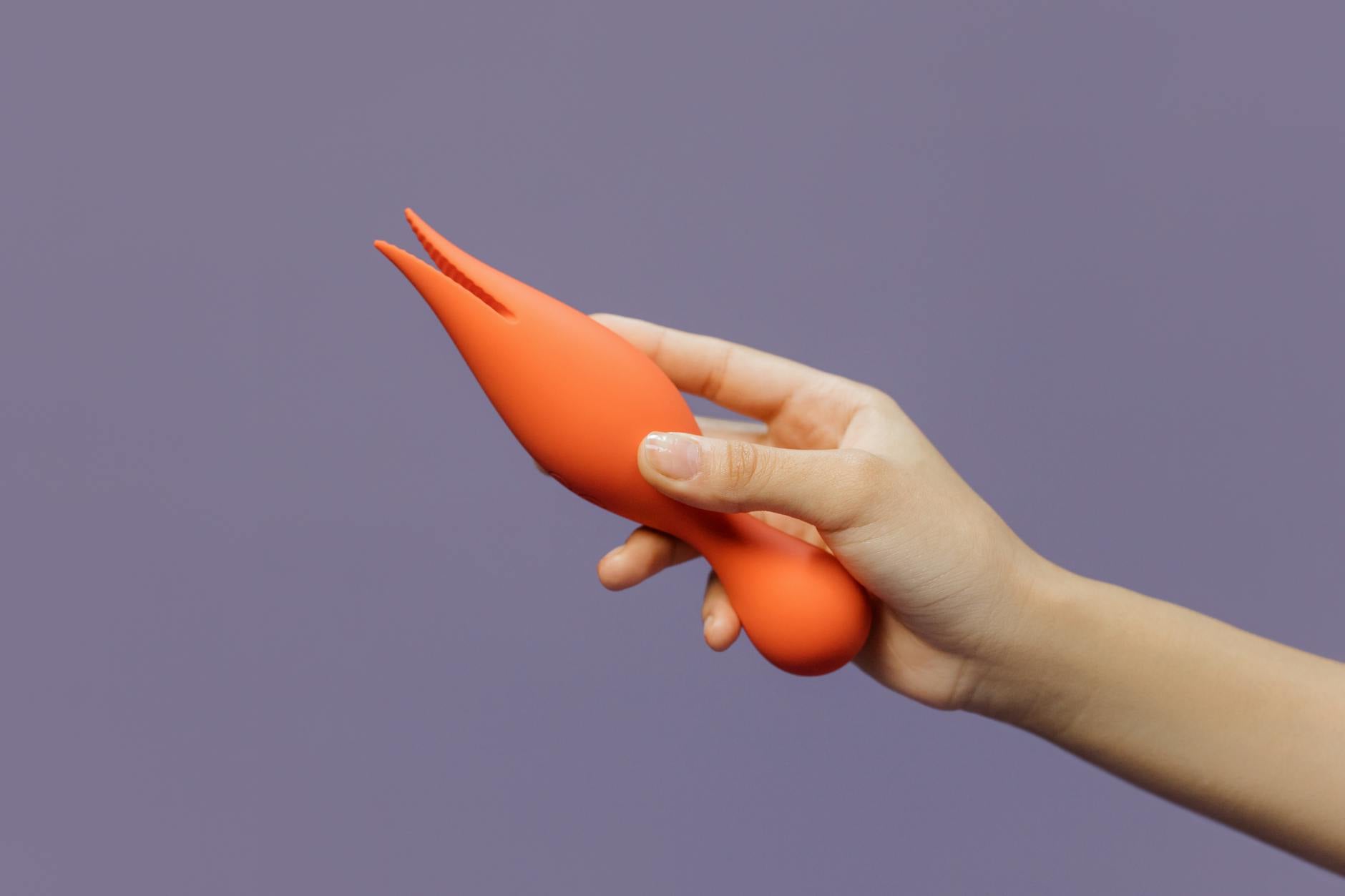
Let's be real: sensitive skin and pleasure toys can feel like opposing forces. You want to explore, but your body's on high alert. The good news is that lemon clitoral vibrators, especially the suction-based design of the Lem, are actually some of the gentler options on the market. But there are real precautions that matter.
I'm going to walk you through exactly what makes a lemon vibrator safe for sensitive skin, which materials to trust, and how to minimize irritation before it starts.
Your skin barrier is your body's first line of defense. When it's compromised—by eczema, contact dermatitis, psoriasis, or just reactive skin that flares with certain fabrics or fragrances—it's more permeable to irritants. Sex toys sit against your most permeable tissue, which means you feel problems faster than you would elsewhere on your body.
The culprits are usually:
Porous materials that trap bacteria and irritants (some cheaper silicones, jelly rubber, cyberskin)
Chemical residue from manufacturing
Lubricant additives that your skin doesn't tolerate
Metal components (nickel, cadmium) that leach into contact with moisture
Suction-based lemon sexual toys have a structural advantage here. They don't rely on aggressive friction, so the stimulation itself is gentler. The real work happens above the vulva, not directly on the most sensitive mucous membranes.
Not all silicone is created equal. When you're shopping for a clitoral vibrator designed for sensitive skin, these specs matter:
Food-grade medical silicone. This is the gold standard. It's non-porous, hypoallergenic, and manufactured to strict purity standards. If the product page doesn't explicitly say "medical silicone" or "food-grade silicone," ask. If they won't answer, move on. Most Hello Nancy products use this standard, including the Lem.
Sealed electronics. Any battery compartment or charging port should be airtight. Water shouldn't be pooling in crevices where bacteria colonize and then leach chemicals onto your tissue.
No cheap coatings. Some toys have a velvet or matte finish that sounds nice in marketing but is actually a porous coating over the base material. Avoid those. Smooth, sealed silicone is your friend.
Stainless steel accents, not plated. If there's a metal ring or contact point, it should be surgical stainless steel (316L is ideal). Plated metals degrade with moisture and heat, and microscopic flakes end up on your skin.
This is where sensitive skin owners often get tripped up. A toy can be made of the right material but still trigger a reaction if it's not properly cleaned before use.
Before your first use with a new toy, wash it with warm water and unscented soap. Not antibacterial soap, which is harsh and unnecessary. Just plain soap and water for 30 seconds, paying attention to any seams or crevices.
After each use, do the same thing. If you're using lube (which I recommend even for less sensitive skin), make sure every trace is gone. Dried lube residue plus overnight storage equals bacterial food source.
Store it dry. A damp toy in a closed drawer or pouch is asking for mold. Air-dry completely on a clean towel, then store uncovered or in a breathable pouch.
If you're using a suction toy like the Lem, you need some kind of lubrication between the toy and your skin to create the seal and prevent suction-related irritation. This is non-negotiable.
But not all lubes are equal for sensitive skin. Here's what works:
Water-based lubes without glycerin or parabens. Glycerin breaks down into sugar, which can feed yeast and bacterial overgrowth. Parabens are chemical preservatives that some skin reacts to strongly. Look for "paraben-free" and "glycerin-free" on the label. Hypoallergenic water-based lubes exist and they work fine.
Silicone-based lube is generally safe, but it's harder to clean off and it can degrade silicone toys over time. If you go this route, use less and wash thoroughly after.
Avoid: Anything with "warming" or "cooling" sensations (those are usually alcohol-based irritants), anything scented, anything with spermicide or nonoxynol-9.
When you apply lube, use a small amount. Too much actually creates a breeding ground for bacteria because it traps moisture against your skin. Pea-sized amount, applied directly to the toy and your skin before use.
Even with the right toy and the right lube, if your skin has a history of strong reactions, a patch test makes sense. I know it sounds clinical, but it's genuinely helpful.
Clean the toy, apply your chosen lube, and hold the toy gently against your inner arm or thigh for 10 minutes. Not using it, just contact. If there's no redness or itching 24 hours later, you're likely fine. If there's any reaction, you've caught it early without subjecting your most sensitive tissue to the irritant.
Some people need to do this with different lubes too. Your skin might tolerate one brand but not another, even if both are technically paraben-free.
Start at the lowest setting. Especially with suction toys, the sensation can build quickly. Low setting for the first few sessions gives your body time to acclimate to the sensation and your skin a chance to show whether irritation is developing.
Keep sessions shorter than you think you need. If you're used to 20-minute sessions with your old toy, aim for 10 minutes with the Lem until you know how your skin responds.
Watch for signs of irritation: unexpected redness beyond normal arousal flush, itching that doesn't fade quickly, small breaks in the skin, or swelling. If any of those appear, stop using the toy immediately, rinse thoroughly with cool water, and let the area air-dry. If irritation persists beyond 24 hours, see a healthcare provider.
Take breaks between uses. Even with the right toy, using it every single day can wear down your skin barrier. Every other day or every third day gives your tissue time to recover. This is especially true if you're exploring a new toy.
If you develop persistent itching, burning, unusual discharge, or visible damage to the skin after using a toy, that's worth mentioning to a gynecologist or dermatologist. You're not going to shock them. They see this regularly, and they can usually identify whether it's a reaction to the toy material itself, the lube, or something else going on (like a yeast infection that's coincidentally timing with toy use).
If you have a diagnosed skin condition like eczema or psoriasis, it's worth mentioning to your healthcare provider before introducing a new toy, even if it's medical-grade. They might suggest specific prep or aftercare that's tailored to your condition.
One of the biggest shifts I see in my practice is when someone with sensitive skin finally finds a toy that works without punishment. The Lem's suction mechanism is gentler on tissue than traditional vibration patterns, which is part of why so many people with sensitivity choose it. But that advantage only works if you're supporting it with clean materials, proper hygiene, and the right lube.
Your pleasure matters just as much as someone with completely untroubled skin. It just requires a slightly different approach. And honestly? That approach—being intentional about materials, paying attention to your body's signals, taking time to explore—often leads to better self-knowledge anyway.
If you're still uncertain about whether a particular toy is right for your skin, reach out. That's what we're here for.
Yes, but with extra caution. Eczema-prone skin is already compromised, so material purity is non-negotiable. Stick with certified medical-grade silicone, wash thoroughly before and after use, and consider patch testing first. Some people with eczema find suction toys like the Lem gentler than traditional vibrators because there's less repetitive friction.
Medical silicone is manufactured to pharmaceutical purity standards, meaning fewer chemical residues and impurities. Regular silicone can be porous, may contain plasticizers that leach, and often has manufacturing byproducts that irritate sensitive skin. Medical-grade is worth the investment if you have reactive skin.
No. Coconut oil is occlusive and can trap moisture against your skin, promoting bacterial and yeast growth. It also stains silicone over time. Stick with water-based lubes made for intimate use. They're formulated with your vaginal pH in mind.
Silicone quality varies hugely depending on manufacturing standards. Cheaper silicone can contain phthalates, heavy metals, or manufacturing chemicals. Brands that disclose their material sourcing and quality standards are your safest bet. Hello Nancy publishes these specs because transparency matters for sensitive skin.
Some temporary flushing from increased blood flow is normal. But true irritation—burning, itching, prolonged redness, or texture changes—is not. If you can't tell the difference, the "24-hour rule" helps: if it's completely resolved by the next day, it was likely just flushing. If it's still there, something triggered a reaction.
Every other day is a good starting point. This gives your skin time to recover between sessions. Some people with robust skin can use toys daily without issues. Others need more space. The best rule is to listen to what your body tells you. If you notice increasing irritation over consecutive uses, back off the frequency.
Sensitive skin doesn't mean you're locked out of pleasure. It means you choose intentionally, you pay attention, and you take care of yourself before and after. A lemon vibrator, especially a suction-based one, can absolutely be part of that equation. The material matters, the hygiene matters, the lube matters. Get those right, and you're not managing a problem. You're just taking care of yourself while exploring something that feels good.
If you're still not sure where to start, check out the buying guide for recommendations tailored to different skin types. Or reach out to us. We're here to help you figure out what's right for your body, not someone else's.