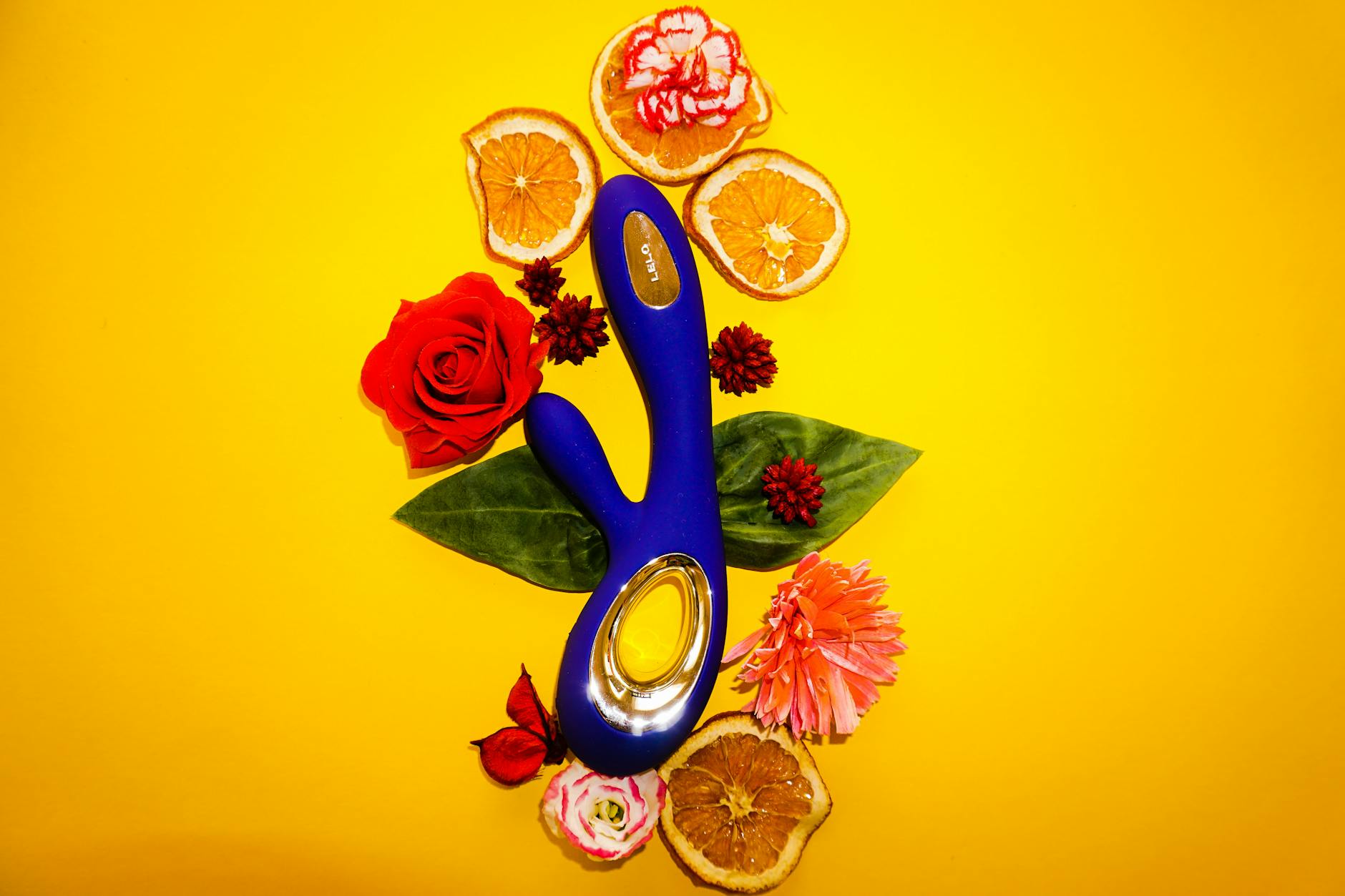
How to Use Lemon Vibrators When Your Partner Resists Sex Toys
Your partner feels threatened by toys. Here's how to reframe the conversation, build trust, and introduce a lemon vibrator without triggering defensiveness or shame.
Your partner says no to sex toys. But the "no" isn't about the toy. It's about what they think the toy means: that you're not satisfied with them, that they're not enough, that you want something they can't give. That fear lives under the resistance, and until you address it directly, introducing a lemon vibrator is going to land like a threat.
After years of working with couples navigating this exact impasse, I've heard the same handful of fears come up:
"If you need a toy, I'm failing." This one runs deep. Many people were raised to believe that a partner's pleasure is their responsibility, and that a "good" partner should be enough on their own. A toy feels like evidence of inadequacy.
"It feels like you want someone else." Toys get entangled with infidelity anxiety, even though they're completely different things. Your partner may be imagining that the toy is a substitute for them, not an addition to partnered sex.
"Sex toys are for people whose relationships are broken." Some partners grew up in cultures or families where toys carried shame, where they signaled desperation or promiscuity. That baggage doesn't disappear just because they're now with someone who wants one.
"If I say yes, what comes next?" This one's less obvious. Some partners fear that introducing a toy is a slippery slope toward kink, group sex, or other things they're not comfortable with. The toy becomes a gateway anxiety.
None of these fears are actually about the lemon vibrator. They're about identity, adequacy, and control. Until you separate those conversations, you're fighting the wrong battle.
Pick a calm moment, not during sex or when you're already frustrated. Say something like: "I want to talk about something that matters to me, and I'm worried you might take it the wrong way. That's on me to be clear."
Then be specific about what you want, not what you're dissatisfied with. "I want to feel more of X" is different from "I'm bored with what we're doing." "I want to explore sensation with you" lands differently than "You're not making me come fast enough."
Be radically honest about why. Is it because your body changed and you need different stimulation? Because your arousal patterns shifted? Because you want to feel less performance pressure? Because you're curious? All of these are legitimate. Pick the true one.
Then ask your partner what they're afraid of. Don't defend against it. Just listen. Let them name it. Half the time, once they've actually said the fear out loud, they realize how irrational it is.
Once that conversation is settled, introduce the idea of the lemon vibrator as a specific tool, not a general indictment.
Don't say: "I want to use a toy." (Too vague. They fill in the blanks with their worst fears.)
Do say: "I've been reading about lemon clitoral vibrators. They work differently than I thought. They use suction instead of vibration, which means they're less about speed and more about a different kind of sensation. I want to try that with you, as part of what we do together. Not instead of what we do."
The specificity matters. You're not talking about a category. You're talking about a particular toy with a particular mechanism that does a particular thing. That's harder to catastrophize about.
If they're still resistant, ask what specifically worries them. Is it the toy itself? The idea of you using it on yourself during partnered sex? The idea that they should use it on you? These are different conversations.
Many couples find that the resistance softens if the toy enters the picture alone first.
You use the lemon vibrator solo. Not secretly. You tell your partner: "I'm going to explore this by myself for a bit. I want to understand my own body better with it. Eventually I'll want to use it with you, but this first part is just for me to figure out what I like."
This accomplishes several things. It removes the pressure on your partner to perform or facilitate. It demonstrates that the toy isn't a replacement for them. It gives them time to get used to the idea. And it gives you data. When you eventually use it together, you'll know exactly how you like it, so the experience is more collaborative and less like an experiment they're watching from the sidelines.
Many partners report that watching their significant other use a lemon vibrator solo actually softens their resistance. They see pleasure happening. They see focus and self-awareness. They see that the toy isn't a threat to them. It's a tool for their partner's body.
Listen to what comes up. Is it visual discomfort? Some people find it easier to use a toy if they're not watching it. Closing your eyes, or his eyes, or changing positions so he's not staring at it. That's fine.
Is it a feeling of being displaced? Then go slower. Use the lemon vibrator for part of your pleasure, not all of it. Alternate between partnered touch and solo toy. Make sure there's plenty of non-toy contact so he's still physically involved.
Is it performance anxiety that the toy is "better" than he is? Then talk about it explicitly. The lemon vibrator doesn't feel better. It feels different. Suction is a different sensation than fingers or a tongue. It's not a comparison. It's variety.
For some couples, integrating the toy into partnered sex takes time. That's okay. You're building new neural pathways together, and his comfort matters.
If the resistance is absolute and unchanging, if he refuses to have the conversation at all, if he shames you for wanting the toy, then you have a larger relationship problem.
A sex therapist or couples counselor trained in intimacy issues can help navigate this. I say this not to alarm you, but to be honest. Shame spirals around pleasure are hard to untangle alone. A professional can help both of you separate fear from logic and find common ground.
The resistance isn't always about the toy. Sometimes it's about control, or anxiety around aging, or old sexual trauma, or a pattern of emotional disconnection that shows up everywhere. A good therapist spots that.
If your partner is going to come around, a lemon clitoral vibrator has some advantages over other toys.
The suction mechanism is less visually obvious than a traditional vibrator. It doesn't look as much like a toy. That can lower some of the shame associations.
It produces sensation through air, not friction. That feels radically different than fingers or a tongue, which can make it feel less like a "replacement" and more like a completely different experience. That distinction sometimes helps partners feel less competitive with it.
It's quieter than most vibrators, which means less auditory reminder that something mechanical is happening. Funny, but true.
And because it works so well for clitoral sensation, the results are often quick and noticeable. A partner who watches you reach a powerful orgasm with a lemon vibrator often shifts from "I'm being replaced" to "I want to be part of creating that."
That's not guaranteed. But it's a real shift I see happen.
Your partner's resistance isn't a character flaw. It's a wound from how they were raised, how they learned to understand sexuality, what they were told about their role in a relationship.
Unwinding that takes patience. You can't logic someone out of a fear they didn't logic themselves into. But you can create enough safety, enough honesty, and enough pleasure that the fear starts to look smaller.
Use the lemon vibrator. Feel good in your body. Invite your partner into that pleasure without demanding they be the one creating it. That invitation, repeated over time, often works better than any argument.
Start with your own desire, not the toy. "I've been thinking about exploring my pleasure more. I want to try something new." Then listen to their response before you introduce a specific tool. If they're curious, then you can talk about what you want to try.
Vibrators in general can trigger fears around adequacy or replacement. A lemon vibrator is often seen as less intimidating than a traditional vibrator because it works through suction, not friction, and it doesn't try to replicate what a partner can do. But the fear underneath is usually the same regardless of which toy it is.
Yes. If your partner's resistance comes from fear, not from a fundamental incompatibility, then introducing the toy once they're on board often opens up new pleasure and new communication. You're both learning how to bring in new tools. That's collaborative.
Respect that. Use the lemon vibrator when you're not with your partner, or during partnered sex but in a position where he's not watching directly. Comfort matters more than inclusivity at the beginning. His willingness to allow it is the first step.
Yes. That's a cultural messaging issue, not a personal failing. Many people grew up believing that a partner's pleasure is their direct responsibility, and that needing anything else is a failure. That belief is widespread and deep. Addressing it takes patience and reassurance, not defensiveness.
Don't bring it up again in the same conversation. But revisit it in a few months if your desire hasn't changed. People's perspectives shift. Maybe they'll have read something, or heard a friend talk about it, or thought more about your explanation. Give them time to process without pressure.
The resistance your partner has is real, and it's worth taking seriously. But it's also not a permanent veto on your pleasure. The lemon vibrator isn't going anywhere. Your desire isn't going away either. What changes is the conversation, the timing, and the way you frame what you're asking for.
If you want support navigating this with a partner, or if the resistance is part of a larger pattern of disconnection, reach out. I work with couples on intimacy and communication regularly. You don't have to untangle this alone.