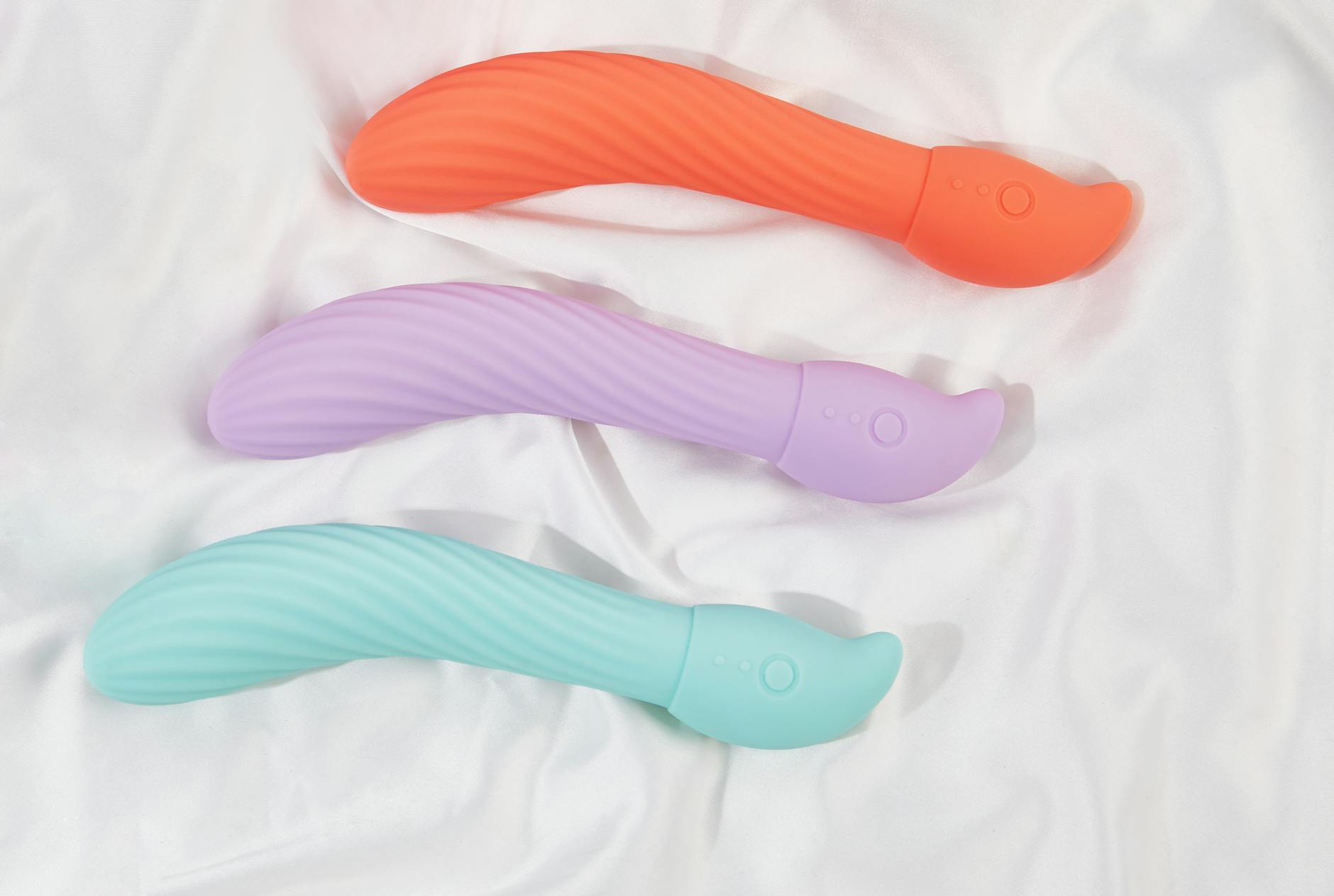
How to Use Lemon Vibrators for Better Orgasms When You're on Birth Control
Hormonal contraceptives change how your body responds to pleasure. Here's what actually shifts, why lemon clitoral vibrators work differently on birth control, and exactly how to recalibrate.
Your birth control isn't just preventing pregnancy. It's altering estrogen and progesterone levels in ways that genuinely affect arousal, lubrication, and how intensely you orgasm. Some people barely notice. Others find their pleasure feels muted, delayed, or differently textured. Both are normal. Both are fixable.
The thing is, most people assume the problem is them. It's not. Your nervous system is literally responding to different hormone levels, and that changes everything from how quickly blood flows to your clitoris to how sensitive your nerve endings feel. A lemon vibrator, with its unique suction mechanism, often adapts better to these hormonal shifts than traditional vibration does.
I'm going to walk you through exactly why, and how to use lemon vibrators when you're on any form of hormonal birth control.
Let's start with the mechanics. Most hormonal contraceptives (the pill, the patch, the shot, the ring) suppress your natural hormonal cycle. They're basically flooding your system with steady doses of synthetic or bioidentical hormones, which means your estrogen and progesterone never spike and crash the way they do naturally.
Why does this matter for pleasure? Because estrogen directly affects:
Blood flow to your genitals (less estrogen, slower arousal)
Vaginal lubrication (same story there)
Clitoral sensitivity and nerve responsiveness (yes, hormones control this too)
The thickness and elasticity of vaginal tissue
Progesterone affects mood, which affects desire. Higher synthetic progestin in your pill can sometimes feel subtly depressing, which absolutely tanks libido for some people.
Here's the weird part though: your clitoris doesn't have fewer nerve endings. Your arousal pathway isn't damaged. Your orgasm capacity hasn't changed. What's changed is the speed at which arousal builds and the intensity you feel along the way. For some people on birth control, that means needing more time to warm up. For others, it means finding that traditional vibration feels either too harsh or doesn't quite reach the spot that used to reliably get them there.
Traditional vibrators work by moving back and forth or in circles, creating sustained friction. That's effective, but it relies on consistent clitoral sensitivity and tissue responsiveness. When hormones are dampening things slightly, you might find yourself cranking the intensity up just to feel the same sensation you felt off birth control.
Lemon vibrators work on suction. They gently draw the clitoris into a soft seal and stimulate through negative pressure rather than direct vibration. Here's why that matters when you're on hormonal contraceptives.
First, suction doesn't require the same level of baseline sensitivity. It works by creating a different kind of stimulation altogether. Your nerve endings aren't waiting for traditional friction. They're responding to a gentler, broader sensation that feels almost like a soft pulling feeling. That mechanism often feels more effective when sensitivity is slightly blunted by hormones.
Second, because suction works differently, you're not fighting against a muted sensation. You're working with your body's current state. It's like the difference between trying to hear someone whisper across a noisy room versus having them speak directly into your ear. Same person, different approach.
Third, lemon clitoral vibrators often feel less fatiguing over time. Some people on birth control find that traditional vibrators can feel almost numbing after 10-15 minutes. The suction feeling tends to maintain its effectiveness longer.
If you've never used a lemon suction vibrator and you're on birth control, here's how to think about it. You're not trying to replicate what you felt off hormonal contraceptives. You're discovering what feels good now, in your current hormonal state.
Start with the lowest intensity setting. I know this sounds obvious, but most people skip this step and go straight to medium because they think they need the strength. With suction, starting low actually teaches your body what to expect. The sensations build faster than you'd think.
Give yourself a longer warm-up window than you might need off birth control. Aim for 15-25 minutes of foreplay, external stimulation, or solo exploration before you even bring the toy in. Your body's arousal response might be a bit slower on hormonal contraceptives, and rushing skips over what could be amazing sensation.
When you do use the lemon vibrator, start with the suction at the gentlest setting and let it work for 2-3 minutes before adjusting. What feels subtle at first often becomes more intense as your body responds. Your clitoris will engorge with blood, and that changes everything.
Here's where most people get stuck. They assume that if low intensity isn't working immediately, they need medium or high. But on birth control, your body sometimes needs permission to warm up to sensation rather than immediate intensity.
Think of it this way. Your arousal is a dimmer switch right now, not an on-off toggle. The intensity should follow your body's actual response, not your memory of what worked six months ago.
I usually recommend a three-session experiment. Session one: lowest setting only, for as long as it feels good (could be 5 minutes, could be 20). Notice what happens. Does the sensation intensify as you go? Does your clitoris become more responsive? That's your body learning.
Session two: start low, then move to medium about halfway through. Notice if the transition feels jarring or natural. Some people find that gradual escalation feels way better than staying in one place. Others prefer to stay low and let it build on its own.
Session three: use what you learned and play around. Maybe you're a low-intensity person on birth control now, and that's genuinely satisfying. Maybe you need to escalate. The point is, you're working with your body's actual response, not against it.
Sometimes even with a lemon vibrator, things feel blunted. This could mean a few things.
First, check your birth control type. Some pills and some progestins genuinely affect libido more than others. If you've been on the same pill for a few months and pleasure still feels muted, it's absolutely worth talking to your prescriber about switching. Brands with lower progestin doses or different progestin types sometimes feel totally different in terms of desire and sensation.
Second, consider that this might not be the birth control at all. Stress, relationship tension, and exhaustion also tank sensation and arousal. If everything feels flat, look at the full picture. Is work brutal right now? Are you sleeping? Is there tension with your partner that's unspoken? Those things are real and they matter more than the toy.
Third, if you're using the lemon vibrator for the first time on birth control, give yourself grace. Your body might need several sessions to understand this new type of stimulation. Suction is genuinely different from what most people have tried, and it sometimes takes three or four uses before it clicks.
If sensation is still genuinely missing after two weeks of regular exploration with a lemon clitoral vibrator, and you've ruled out stress and relationship stuff, that's a conversation for your doctor. Decreased sensation on hormonal contraceptives is real and sometimes fixable with a different formulation.
Here's the honest part. Some birth control methods genuinely suppress libido or sensation more than others. The copper IUD doesn't involve hormones at all and some people find their pleasure returns within weeks of switching. Certain pills and implants are known for libido dampening. That's not a flaw in you. That's a real side effect.
But before you change your birth control method, I'd give lemon vibrators at least a month. Three to four weeks of regular use (not necessarily daily, but consistently) is enough time for your body to recalibrate to this different type of stimulation. A lot of people find that what felt muted with traditional vibrators suddenly feels incredibly effective with suction.
If you do switch birth control methods to address pleasure, you won't need to throw out what you learned. Lemon vibrators work beautifully across hormonal states. But you might find yourself adjusting intensity again, and that's normal.
If you're exploring lemon vibrators with a partner while on birth control, the most useful thing you can do is separate the conversations. "My pleasure feels different than it used to" is not the same as "I'm not attracted to you anymore." Confusing them makes both conversations worse.
Many people on birth control find their desire is lower but their capacity for pleasure, when they do engage, is just as strong. Tell your partner that. Tell them you might need a longer warm-up. Tell them you're using the lemon vibrator to explore what feels good now, not to compensate for something broken. That reframe changes everything.
No. Different pills, patches, implants, and shots have different hormonal ratios, and those ratios affect people differently. Some people on the pill feel almost no change in pleasure. Others feel a real dip. Copper IUDs and barrier methods don't involve hormones at all, so they won't have this effect. If your current birth control method is genuinely killing your pleasure and you've tried adjusting your approach with tools like lemon vibrators, talk to your prescriber about alternatives. Not all hormonal contraceptives feel the same.
You can use it right away, but think of the first few sessions as exploration rather than expecting immediate results. Your body is operating in a different hormonal state, and suction stimulation might feel unfamiliar. Start with low intensity and give yourself time to warm up. Many people find that after three to five uses, their body really understands this type of sensation and response becomes stronger.
Probably. Different hormonal environments create different baseline sensitivity and arousal speeds. If you switch from a high-progestin pill to a lower-dose version, or from hormonal to non-hormonal birth control, you might find you need to adjust lemon vibrator intensity again. That's not a problem. It just means recalibrating, which usually takes a couple of sessions.
Completely normal. Hormonal contraceptives often slow arousal response. Where you might have felt ready in five minutes off birth control, you might need 15-20 minutes on it. That's not something wrong with you. That's just how your body is responding to the hormonal environment. A longer warm-up window often makes pleasure feel stronger and more consistent.
That's up to you and your comfort level. What's important is telling your doctor that pleasure or libido feels affected by your birth control. You don't have to specify the tools or methods. You just need to communicate that it's an issue, because your doctor can offer options: a different birth control formulation, adjustments to timing, or other solutions you might not have considered.
Yes, often. A lot of people stop birth control thinking it's the only solution, only to realize that pleasure issues were about stress or relationship tension, not the hormones. Before you stop a birth control method that's otherwise working for you, try exploring with a lemon clitoral vibrator for a few weeks. You might find that this different type of stimulation actually restores what felt missing. If you do decide to stop or switch, you'll have learned a lot about what your body needs.
Birth control changes your body. That's a fact. But it doesn't change your capacity for pleasure or your right to good sensation. It just changes how you get there. Lemon vibrators, with their unique suction mechanism, often work better than traditional vibration when hormones are in the picture. Because they work differently, they bypass some of the sensitivity dampening that can happen on hormonal contraceptives. You're not compensating for a problem. You're just matching the right tool to your body's current state. That's how you get back to consistent, satisfying pleasure.