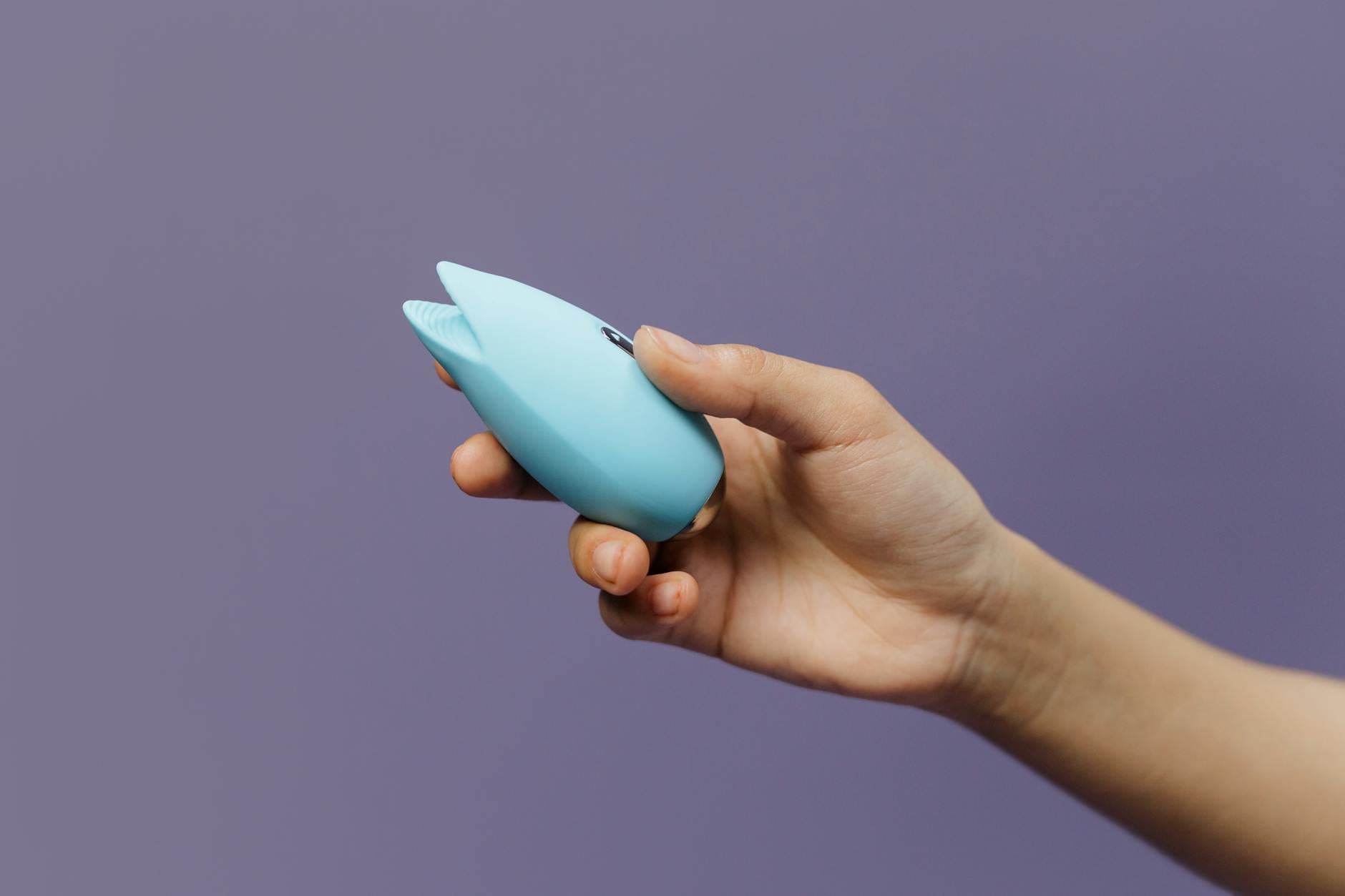
How to Use Lemon Vibrators for Better Orgasms After Antidepressants
Antidepressants save lives and sometimes flatten sensation. Here's exactly how lemon clitoral vibrators can help you reclaim pleasure without changing your medication.
About 40 to 60 percent of people on SSRIs experience some change in orgasm intensity. Not loss of desire. Not inability to climax. Change in intensity. That's a huge distinction, and one most doctors gloss over because the alternative to antidepressants is depression, which is infinitely worse for your sex life than medication side effects.
But here's what nobody tells you: the right tool, used the right way, can rebuild that sensation pathway. Lemon vibrators, specifically the kind that use suction rather than vibration, work differently on desensitized tissue. They don't force intensity. They coax it back.
SSRIs (selective serotonin reuptake inhibitors) work by keeping serotonin in your synapses longer. That extra serotonin steadies mood, which is exactly what you want for your brain. But serotonin also affects arousal and orgasm. Too much available serotonin can blunt the neurochemical cascade that builds toward climax. It's not broken wiring. It's a signal-to-noise ratio problem.
The clitoris still has all its nerve endings. Your brain still processes pleasure. The sensation is just... muffled. Like hearing a song through a wall instead of through a speaker.
Traditional vibrators work by stimulating tissue directly through friction and oscillation. If your nerve sensitivity is already dampened by medication, more vibration just becomes noise. It doesn't penetrate the static.
Lemon clitoral vibrators and other lemon suction toys use gentle pressure and release cycles. This engages deeper nerve clusters without relying on surface sensitivity. Think of it as the difference between tapping someone on the shoulder versus gently squeezing it. One requires them to feel every tap. The other creates sustained pressure that registers even if they're partially numb.
The Lem and similar lemon adult toys work by creating a gentle seal and then releasing. This pattern mimics the kind of stimulation that rebuilt sensation for countless people I've worked with who take SSRIs.
Most people on antidepressants make a critical mistake: they start on the highest intensity setting, assume it's not working, and give up.
Instead, begin on setting 1 or 2. Spend 3 to 5 minutes at that level. Your body needs to relearn how to register sensation. This isn't lazy. This is neurological retraining. The goal is to feel something, not to force an orgasm immediately.
Move to setting 3 or 4 after a few sessions. Stay there for a week or two. You're not rushing toward climax. You're rebuilding the communication between your clitoris and your brain.
Most of my clients find their optimal intensity (usually setting 4 to 6) within two to three weeks. The shift isn't always dramatic. Sometimes it's subtle. "Oh, I actually felt that," they'll say. Exactly. That's the win.
Antidepressants affect your body differently at different times of day. For many people, sensation is clearest in the morning or early evening, not late at night when the medication has been metabolizing all day.
Try a lemon clitoral vibrator at different times and track what works. You might discover that 10 a.m. on a Saturday is your peak, not 11 p.m. on a Tuesday. This isn't about forcing sex into a rigid schedule. It's about working with your physiology instead of against it.
Also, rest matters. Fatigue deepens the dampening effect. If you're exhausted, you won't feel much no matter how good the toy is. Budget time when you're actually rested.
With antidepressants on board, your arousal ramp takes longer. Plan for 15 to 20 minutes of foreplay, mental priming, or erotic content before you touch a lemon vibrator to your body.
Your clitoris needs time to engorge with blood. Without that enorgement, you're working with less sensitivity, not more. The vibrator isn't magic. It's a tool that works best when your body is already primed.
If you have a partner, tell them this directly. "I need more time now, and that's okay." That conversation prevents the silent resentment that kills more relationships than anything else.
If you've been consistent with technique for six weeks and orgasm intensity is still completely flat, talk to your doctor. Sometimes a small dose adjustment, a timing shift (taking your medication at a different time of day), or switching to a different SSRI helps. Some antidepressants have less impact on sexual function than others.
Don't suffer in silence assuming this is permanent. It often isn't.
Also mention what you're trying. Good doctors won't be judgmental about lemon vibrators or any other tool. They want to know you're experimenting and advocating for yourself.
Many people worry that using a lemon suction toy during partnered sex feels impersonal or creates awkwardness. In reality, it often deepens intimacy because you're involving your partner in rebuilding your pleasure.
"Here, try holding this while I do this," opens a conversation. Suddenly you're problem-solving together instead of suffering separately. That shift alone can revive connection that antidepressants sometimes strain.
If you're solo, there's no performance pressure. You can take your time, explore without judgment, and rebuild your relationship with sensation on your schedule.
You're not going to use a lemon vibrator once and suddenly feel like you did before medication. But in most cases, people report noticeable improvement in 2 to 4 weeks with consistent use.
Better sensation in 6 to 8 weeks. Reliably strong orgasms (though maybe still different from pre-medication) by week 12.
That's a quarter of a year. Which, when your mental health is stable and your life is functional, is a completely reasonable investment.
Here's the part nobody talks about openly: some people use antidepressant-related sexual changes as permission to finally get curious about their own pleasure without shame.
Before medication, maybe you white-knuckled through sex because you felt obligated. The antidepressant mutes sensation. You get frustrated. You go looking for solutions. You discover lemon adult toys designed specifically to work with desensitized tissue. And suddenly you're exploring your body on purpose, with intention, using tools engineered for this exact problem.
That's not recovery. That's upgrade.
Your antidepressant isn't ruining your sex life. It's giving you a reason to reclaim it intentionally instead of sleepwalking through something that's supposed to feel good.
Antidepressants are saving your mental health. Lemon clitoral vibrators are rebuilding your physical sensation. Neither one is a compromise. They're both part of a life you want to actually live in.
Start low, give it time, and be honest with yourself about what's working. You deserve pleasure. The fact that you're reading this means you're already taking it seriously.
Can I use a lemon vibrator if I'm taking other medications alongside my antidepressant?
Most medications don't interact with external vibrators. The bigger question is how your medication combination affects sensation overall. Some blood pressure medications, certain antihistamines, and anticholinergic drugs can also dampen arousal. If you're on multiple medications, that conversation with your prescriber is even more important. They might be able to adjust timing or dosing to improve your sexual response without changing your overall treatment plan.
How long does it take for sensation to return after switching antidepressants?
It varies. If you switch to a medication with fewer sexual side effects, some people feel a difference within days. Others take 2 to 3 weeks. The adjustment period for your new antidepressant (usually 4 to 6 weeks for full efficacy) means you might not have accurate data on your sexual response until week 6 or 7. Give yourself grace during this time. A lemon suction toy can help you explore sensation even while you're stabilizing on new medication.
Is it normal to need a higher intensity setting on a lemon vibrator if I take SSRIs?
Completely normal. Because your baseline sensitivity is lower, you might need setting 5 or 6 where someone not on antidepressants finds setting 2 or 3 perfect. That doesn't mean your toy is broken or your body is broken. It means you're calibrating for your actual neurobiology. The lemon vibrator is designed to work across the full intensity spectrum. Use what you need.
Can I combine a lemon clitoral vibrator with my antidepressant medication without side effects?
Yes. A vibrator isn't a medication. It's a physical tool. There are no drug interactions. The only thing to monitor is whether using the vibrator consistently helps restore sensation, which is the whole point. Some people benefit from using it daily. Others use it a few times a week. Whatever builds your confidence and pleasure is the right frequency.
What if I still can't orgasm after six weeks of using a lemon vibrator?
Talk to your doctor about either adjusting your current medication or switching to an antidepressant with a lower sexual side effect profile. SSRIs like sertraline have higher sexual dysfunction rates than some others. Bupropion (Wellbutrin), for instance, sometimes actually improves sexual function. Your mental health is the priority, but you don't have to accept sexual flatness as the price. There are other options.
Should I tell my partner I'm using a lemon suction toy to deal with antidepressant side effects?
That's your choice. If you share a bed or a life, honesty usually helps. "My medication has affected my orgasm, so I'm trying this tool to rebuild sensation. Want to learn about it with me?" turns a potential source of silent resentment into a joint problem-solving conversation. Some partners feel relieved to understand what's happening. Others want to be involved. Either way, keeping it secret tends to create more distance than using the tool does.
Research on antidepressant-induced sexual dysfunction confirms that SSRIs affect orgasm quality in 40 to 60 percent of users. The American Psychiatric Association acknowledges sexual side effects as a known limitation of this class. Studies on clitoral stimulation patterns show that suction-based techniques engage different nerve pathways than traditional vibration, making them particularly effective for desensitized tissue. Conversation with your prescriber remains the gold standard for managing medication side effects while maintaining mental health stability.