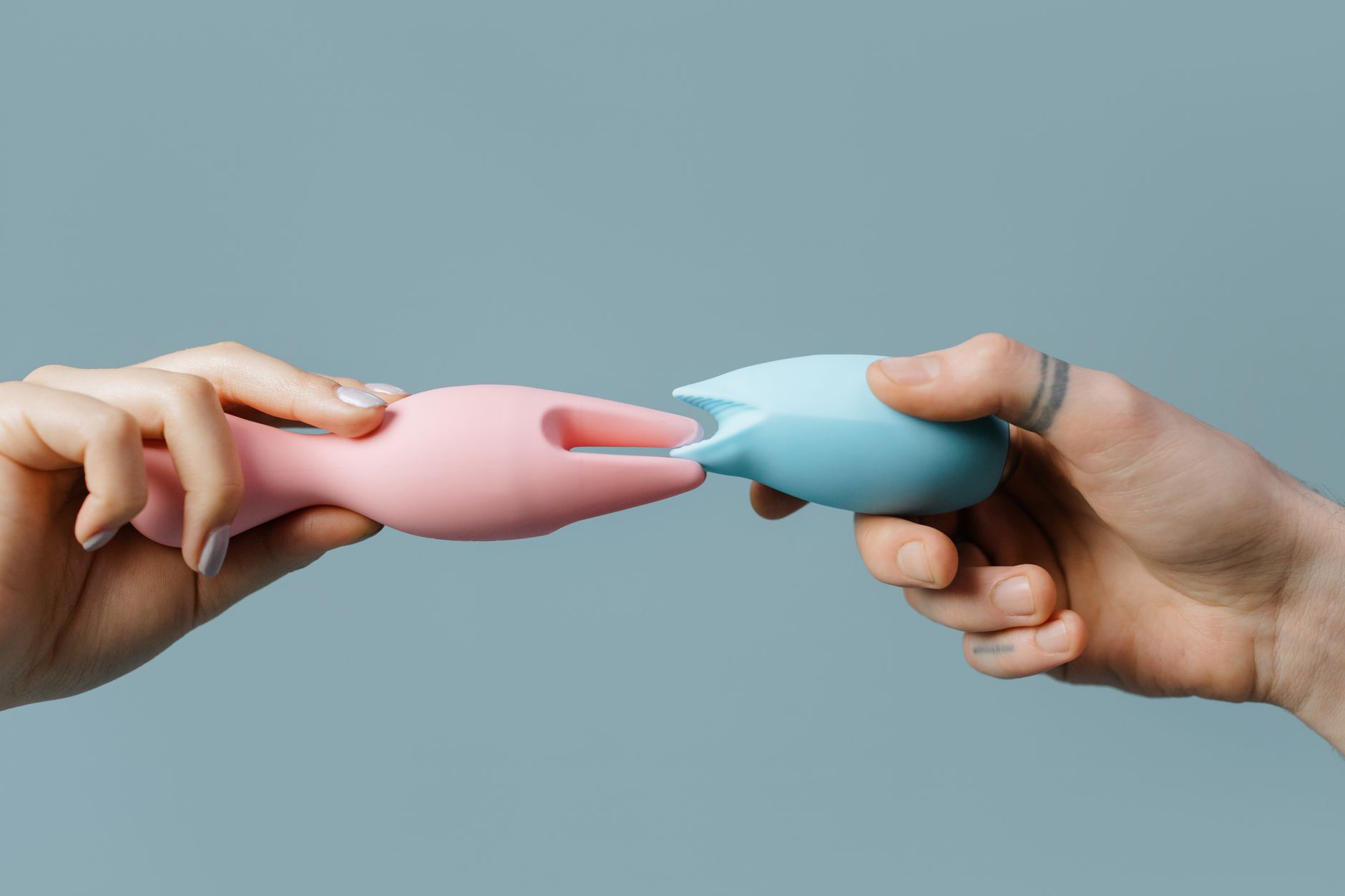
How to Introduce Lemon Vibrators to a New Partner Without Shame
The conversation feels risky, but it doesn't have to. Here's how to bring up clitoral vibrators, lemon sexual toys, and your pleasure in a way that builds intimacy instead of creating distance.
You're three months in. Things are good. And you're sitting with this thing you love, maybe a lemon vibrator or clitoral vibrator like the Lem, and you're thinking: if I bring this up, will they think I'm unsatisfied? Will they feel replaced? Will they get defensive and pull away?
Here's what I see in my practice: people bring up toys during sex (terrible idea), after rejection (loaded with resentment), or in a text when they're already frustrated (invitation to misread). None of those moments can land well because you're mixing emotions together.
The best time is deliberately neutral. Not before sex, not after a disconnect. Ideally over coffee or in a car where you're side-by-side, not face-to-face. That positioning shift alone changes the conversation's texture. You're not interrogating each other. You're talking in the same direction.
Honestly, the preamble matters as much as the ask. You want to signal three things up front: (1) this is about you, not them, (2) you're not asking permission, you're sharing something, and (3) you still want them in this picture.
Here's a version that does all three:
"I wanted to talk about something that's been on my mind. I've realized that my body responds better to certain kinds of stimulation, and I'm thinking about using a toy sometimes, maybe the Lem or something similar. I'm bringing this up because you matter to me and I want you to know what's going on. I'm not unhappy with us. I'm actually trying to understand my own pleasure better, which I think will be good for both of us."
That's it. You've named the object (removes mystery), explained the why (education, not complaint), and anchored it to the relationship (not a rejection).
Most partners have one of three silent worries: "Am I not enough?", "Does she want someone else?", or "I don't know how to respond." The third one is the easiest to solve. People are usually more afraid of saying the wrong thing than they are judgmental.
If they go quiet, that doesn't mean no. It usually means they need a beat to process. Try: "What are you thinking?" Then actually listen. They might say something like, "I guess I'm wondering if I'm doing something wrong." That's the moment to say: "No. You're great. My body just has preferences that aren't about your skill." Full stop. No over-explaining.
If they're skeptical, information helps. You can mention that about 70% of people with vulvas need direct clitoral stimulation to orgasm, and that lemon vibrators and suction toys like the Lem are designed specifically for that. It's not a judgment of your partner. It's anatomy.
Some partners actually light up when they understand this. They realize: oh, I could learn something. I could make her orgasm more reliably. That reframes the toy from threat to toolkit.
No. It means your nervous system needs input that fingers and penis can't replicate. It's not a reflection of their desirability. Compare it to music: you like songs they listen to, but sometimes you need bass drop frequencies they can't produce with their voice. Both things are true.
"I feel weird about it."
That's fair. Weirdness is often just unfamiliarity. Offer a concrete next step: "Want to explore it together sometime? You could hold it, or just be in the room. No pressure to figure it out right now."
"I thought I was enough."
Then slow down. Say: "You are. This isn't about you being not enough. This is about me learning my own body. Like how you might go to the gym even though I think you're fit. It's for you, not because I'm rejecting what you have."
"That seems extreme."
Reframe as normal. "Most people I know have toys. It's not extreme, it's just another thing in the pleasure toolkit." If they've never known anyone openly with toys, they don't have a reference point.
This is actually the fastest path to acceptance. Instead of the toy being a solo thing (which can read as exclusionary), it becomes collaborative. You could say: "I'm thinking about trying this thing. Would you ever want to incorporate it with me? No pressure, but I'd enjoy having you there."
That shifts the dynamic from replacement to expansion. Partners often feel less threatened when they're included. They also discover that watching a partner have an intensely satisfying orgasm is wildly hot for them. That's data that can happen once and change the whole conversation.
If they said yes and you both move forward, check in afterward. Not in a needy way. But a simple "I really liked that" or "Thanks for being open to it" reinforces that this was a connection thing, not a solo thing.
If they said no, that's information too. You then get to decide: is this someone who can evolve, or someone whose boundaries around pleasure are going to be a permanent mismatch? That's worth knowing early.
Don't sneak toys into the relationship. Don't frame it as "most people do this" if you're just guessing. Don't get defensive if they need time to process. Don't compare their body or performance to something you saw online. Don't weaponize pleasure later in an argument ("Well, at least the toy doesn't complain"). These all poison the well.
Introducing lemon sexual toys or clitoral vibrators isn't actually about the object. It's about modeling vulnerability and priority-setting around your own pleasure. A partner who respects your body's needs and can sit with a slightly uncomfortable conversation is a partner who's going to show up differently in other areas too.
This is an intimacy-building move if you do it thoughtfully. It says: I trust you with something real. I'm willing to be awkward in front of you. I want us to be in this together.
Not if sex is already a regular part of your relationship. If you're having sex with someone, you have the relational currency to have a conversation about pleasure. The timeline that matters is when you're comfortable, not some arbitrary calendar date. That said, if you've only slept together once, maybe wait until it's more established.
Then you get to decide whether that's acceptable. Some people need months to metabolize ideas. Some people say that and mean "no, but I don't want conflict." If it's important to your pleasure, you might need to revisit it. You could try: "I wanted to circle back on what we talked about. Anything shifted for you?"
Please don't. That's not transparent, and it invites them to feel blindsided. You'd be teaching them that you hide things instead of talk about them. Start with the conversation.
Then listen to why they want to. Often it's sensory preference, not rejection of you. The same advice applies in reverse. Their body matters. Your comfort matters too, but "I'm scared" is different from "I don't want to." Those need different responses.
That depends on your relationship and how relevant it is. If you've used lemon vibrators or other clitoral vibrators in previous relationships, that context can help them understand this isn't a new impulse. But you don't need to give a sexual history lesson. "I've used toys before and I know what my body responds to" is enough.
Your insecurity is real, but keep it separate from the conversation. Don't say "I need this because you don't satisfy me." Do say "I want to explore my own pleasure more fully." Get support for the insecurity piece (talk to a therapist, trusted friends), and keep the toy conversation grounded in what you want, not what you lack.
That's actually ideal if you're comfortable with it. It makes the whole thing less secretive and more collaborative. You could browse together, show them options, explain what appeals to you about something like the Lem. That removes mystery and gives them agency.
If the conversation spirals into a bigger conflict about desire mismatch, sexual satisfaction, or trust, that's when a couples therapist is useful. A good one can help you both understand what's really underneath the toy conversation. Often it's not about the toy at all.
Talk to your partner openly. Give them space to have feelings. Stay grounded in what you actually want. And remember: someone who loves you can sit with a weird conversation. That's partly what love is.