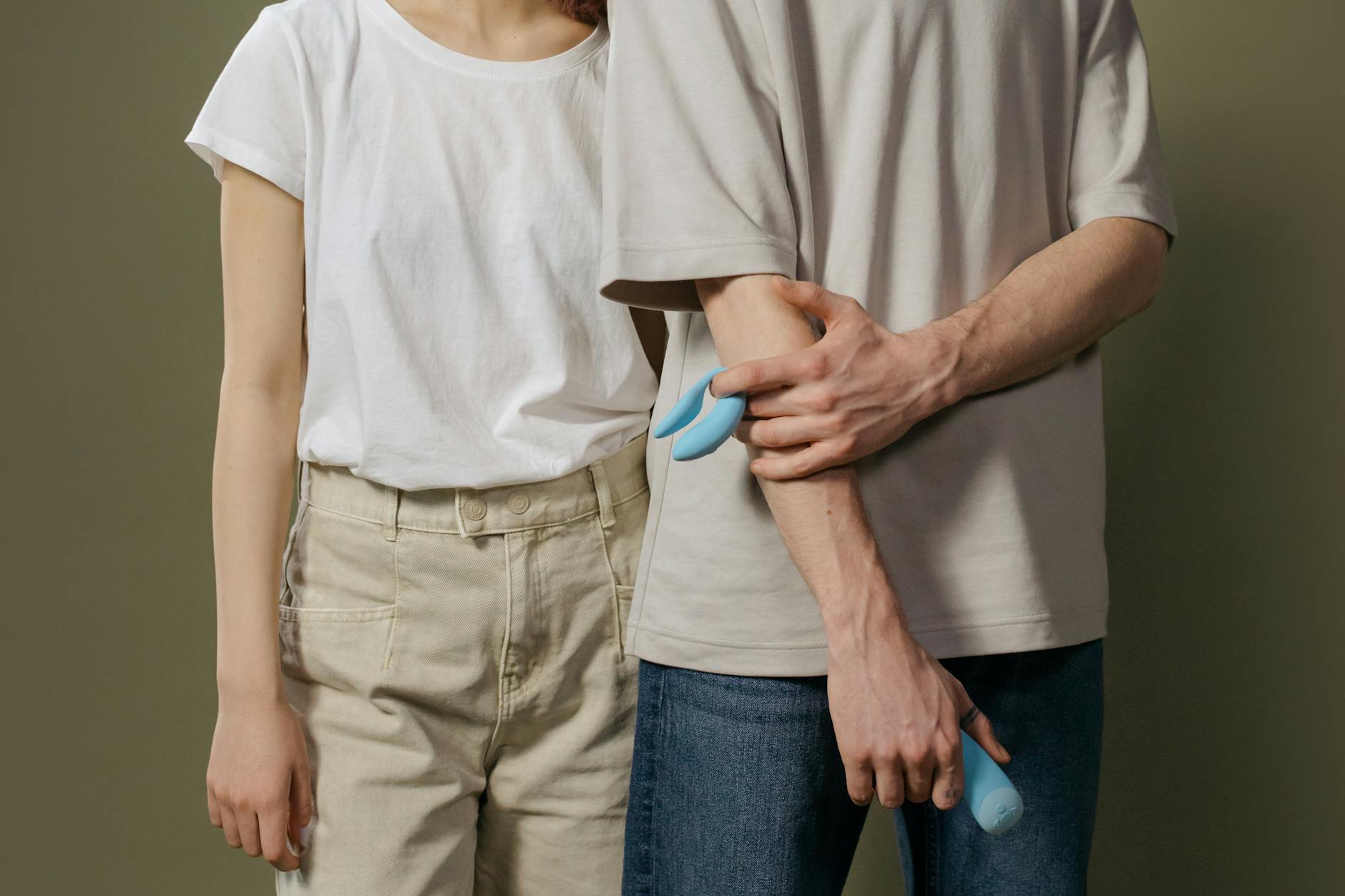
How to Find the Right Lemon Clitoral Vibrator Intensity for Your Body
Not all intensities feel the same on every body. Here's how to dial in the perfect setting on your lem vibrator for maximum comfort and pleasure.
· Marriage and Family Coach
·
·7 min read
Here's the thing about intensity: there's no universal "best" setting. What feels incredible to your partner might be overstimulating to you. What left you cold last week might be perfect today. Your body changes, your nerves respond differently depending on where you are in your cycle, how relaxed you are, and what kind of touch you're craving in that moment.
With a lemon clitoral vibrator like the Lem, you're not locked into one speed. You have options. But knowing which option to choose takes a little experimentation and honesty about what your body actually wants.
The reason intensity gets overlooked is because a lot of sex toy conversations default to "more powerful equals better." That's backward. More powerful equals more intense, which can mean more pleasure or more discomfort depending on your nerve sensitivity, your arousal level, and what you're trying to achieve.
With clitoral vibrators specifically, intensity interacts with suction in ways that traditional vibration alone doesn't. The Lem uses gentle suction combined with vibration patterns. Crank it to the highest setting and you might get a sensation that feels overwhelming rather than pleasurable. Start lower and you might find the sweet spot you didn't know existed.
Tissue sensitivity also shifts. Hormonal changes, stress levels, medications, and even dehydration affect how sensitive your clitoris feels on any given day. What this means practically: a setting that felt perfect last month might feel too intense now. That's not a problem. That's your body giving you data.
If you're new to the Lem or any lemon vibrator, start with pattern 1 or 2 at the lowest intensity level. Yes, I know that sounds slow. That's the point. You're mapping your sensitivity baseline, not chasing an orgasm.
Spend 2-3 minutes at that intensity level. Notice what the sensation actually feels like. Is it pleasant? Boring? Ticklish? Uncomfortable? Your honest answer matters more than whether you have an orgasm.
Then move to pattern 1 or 2 at intensity level 3. Again, 2-3 minutes. You're building a mental map of how different intensities feel on your body.
Once you've sampled a few patterns at a few intensities, you'll start noticing which combinations feel good. Some people love high intensity and fast patterns. Others prefer medium intensity with slower, more deliberate waves. There's no wrong answer. There's only what works for your nervous system.
One of the biggest mistakes I see is applying the same intensity whether you're freshly started or deeply aroused. Your body's capacity for sensation changes as arousal builds.
When you first begin, nerve endings are less responsive. A pattern that feels perfect once you're 10 minutes in might feel weak right now. This is why so many people abandon lower intensities too fast. They assume low intensity means weak sensation. Often it means "not yet."
Here's a practical approach: start at a lower intensity than you think you want. As arousal builds, you can increase it. Many people find they end at a different intensity than they started at. That's normal and good. You're letting your body lead instead of forcing a predetermined intensity.
Lemon vibrators work differently than traditional vibrators because they use suction as the primary sensation. This changes how you think about intensity.
With a regular vibrator, turning up intensity usually means faster vibrations. With the Lem, intensity controls both the suction strength and the vibration speed. This dual action means you can't just assume that "high intensity" will feel the way it does on another toy.
Many people find that they prefer medium intensity with the Lem because the suction already creates a fairly intense sensation. Adding high-speed vibration on top can feel overwhelming. Experiment with medium intensity patterns first. You might discover that's actually your preference, even though you assumed you'd want "maximum everything."
Your ideal lemon vibrator intensity isn't fixed. Several things can change it week to week or even day to day.
Hormonal shifts. Around ovulation, nerve sensitivity often increases. Some people find higher intensities feel better during this window. In the luteal phase, sensitivity might decrease, and you might want to bump up intensity to reach the same sensation. If you track your cycle, pay attention to how your intensity preferences shift.
Arousal level. As mentioned, arousal changes your nerve responsiveness. A longer warm-up period might mean lower intensity feels sufficient. A quicker start might mean you need higher intensity to register as pleasure.
Stress and relaxation. When you're tense, your pelvic floor stays contracted. This can make even moderate intensities feel sharp or uncomfortable. If you're relaxed and present, the same intensity might feel smooth and pleasurable. Take a few deep breaths and let your body settle before deciding intensity has failed you.
Lubrication. Whether you're using external lubricant or your body's natural lubrication affects sensation. More lubrication often makes lower intensities feel more comfortable because there's less friction. Less lubrication might require slightly higher intensity to feel distinct.
Your goldilocks intensity is the sweet spot where sensation feels distinct and pleasurable without tipping into overwhelming. It's usually not the highest setting.
To find it, use this three-session approach over a week.
Session one: Start at intensity 2, pattern 1. Spend 5-10 minutes exploring. Note how it feels.
Session two: Start at intensity 2, pattern 3 or 4. Notice if a different pattern at the same intensity changes the sensation significantly.
Session three: Start at intensity 3 or 4 with your preferred pattern. Compare how it feels to session one.
After three sessions, you'll have enough data to know whether your goldilocks is actually intensity 2, or whether you prefer intensity 4 with a particular pattern. You might find that you like different intensities depending on the pattern. All of this is useful information.
If you're using a lemon clitoral vibrator with a partner, intensity becomes a communication tool. This is where a lot of couples miss an opportunity.
Instead of handing your partner the toy and hoping they land on the right intensity, tell them where you'd like to start. "Let's begin at 2" is concrete. Once you're aroused and can feel what different sensations do, you can guide them up or down. "A little more intense" or "ease back on the intensity" are specific directives.
Many people feel shy about directing a partner toward lower intensity. We've been culturally trained to assume "more" is always better, so asking for lower intensity can feel like rejection. It's not. It's precision. You're helping your partner give you exactly what feels good.
Sometimes people struggle with lemon vibrators because they assume intensity is the problem, when actually something else is. If you've found your goldilocks intensity but sex still doesn't feel good, check these factors.
Positioning. The way you angle the toy changes sensation dramatically. Small adjustments can transform discomfort into pleasure.
Lubrication. If things feel dry or uncomfortable, add lubricant. Water-based lubes work best with silicone toys.
Arousal level. You might need more warm-up time than you're currently giving yourself. Pleasure isn't a switch you flip. It's a dial you turn slowly.
Relaxation. If your pelvic floor is tight, even the perfect intensity will feel off. Progressive relaxation or a few minutes of deep breathing before you start can change everything.
When <a href="/blog/how-lemon-vibrators-improve-pleasure-during-hormonal-transitions">hormonal transitions</a> affect how you respond, or if you're <a href="/blog/how-to-use-lemon-clitoral-vibrator-with-sensitive-skin-or-allergies">managing sensitive skin</a>, intensity might need adjustment, but other factors are usually at play too.
If the Lem feels too intense even at the lowest setting, you might be starting before you're ready. Try a longer arousal period. Spend 10-15 minutes with manual touch, partnered touch, or mental focus before introducing the toy.
If it feels too weak even at the highest setting, check that you're using it correctly. The seal matters. The toy should sit flush against your skin to create proper suction. If it's not, sensation will feel muted regardless of intensity.
If intensity feels overwhelming on one day but perfect on another, trust that variation. Your body is communicating something about your hormones, stress level, or arousal capacity that day. Lower the intensity without judgment.
Here's what I tell clients regularly: your pleasure preferences are allowed to change. You don't have to defend preferring lower intensity. You don't have to perform for a toy setting that doesn't feel good. You're allowed to experiment endlessly and still not find a "final answer."
Intensity is a tool. You're the one who gets to decide how to use it. Start low, pay attention, adjust based on what you actually feel, and let your body tell you when you've found the sweet spot. That's it. That's the whole practice.
Can intensity damage my clitoris if I use it too high?
No. Your clitoris is surprisingly durable. Very high intensity might feel uncomfortable, but it won't cause injury. That said, comfort matters more than intensity. If something feels overwhelming, you don't need to push through it.
Will my body get used to a certain intensity and need higher settings over time?
Sometimes, but not always. Some people do notice that their preferred intensity shifts over months or years of use. Others find their goldilocks stays consistent. If you notice you need higher intensity, try switching up patterns or taking breaks between sessions. Variety can restore sensation.
Is medium intensity on a lemon vibrator the same as medium intensity on another toy?
No. Because the Lem uses suction, medium intensity on the Lem might feel stronger than medium intensity on a traditional vibrator. Don't assume settings are equivalent between different toys.
What if my partner and I prefer completely different intensities?
Then you take turns or use it at different times. If you're using it together, you might start at one partner's preference and shift based on what everyone's feeling. There's no rule that says both partners have to enjoy the same intensity.
Should I use my highest comfortable intensity or stay slightly below it?
Stay slightly below. You want intensity to feel reliably good, not at the edge of what you can tolerate. That edge moves depending on the day, and you don't want to accidentally overshoot into discomfort.
How long does it take to find my ideal intensity?
For most people, three to five sessions. Some people know within one session. Others take longer. There's no timeline to beat.
Can I change intensity mid-session?
Absolutely. Turning intensity up as arousal builds is actually ideal for many people. You're not locked into one setting for the entire session.