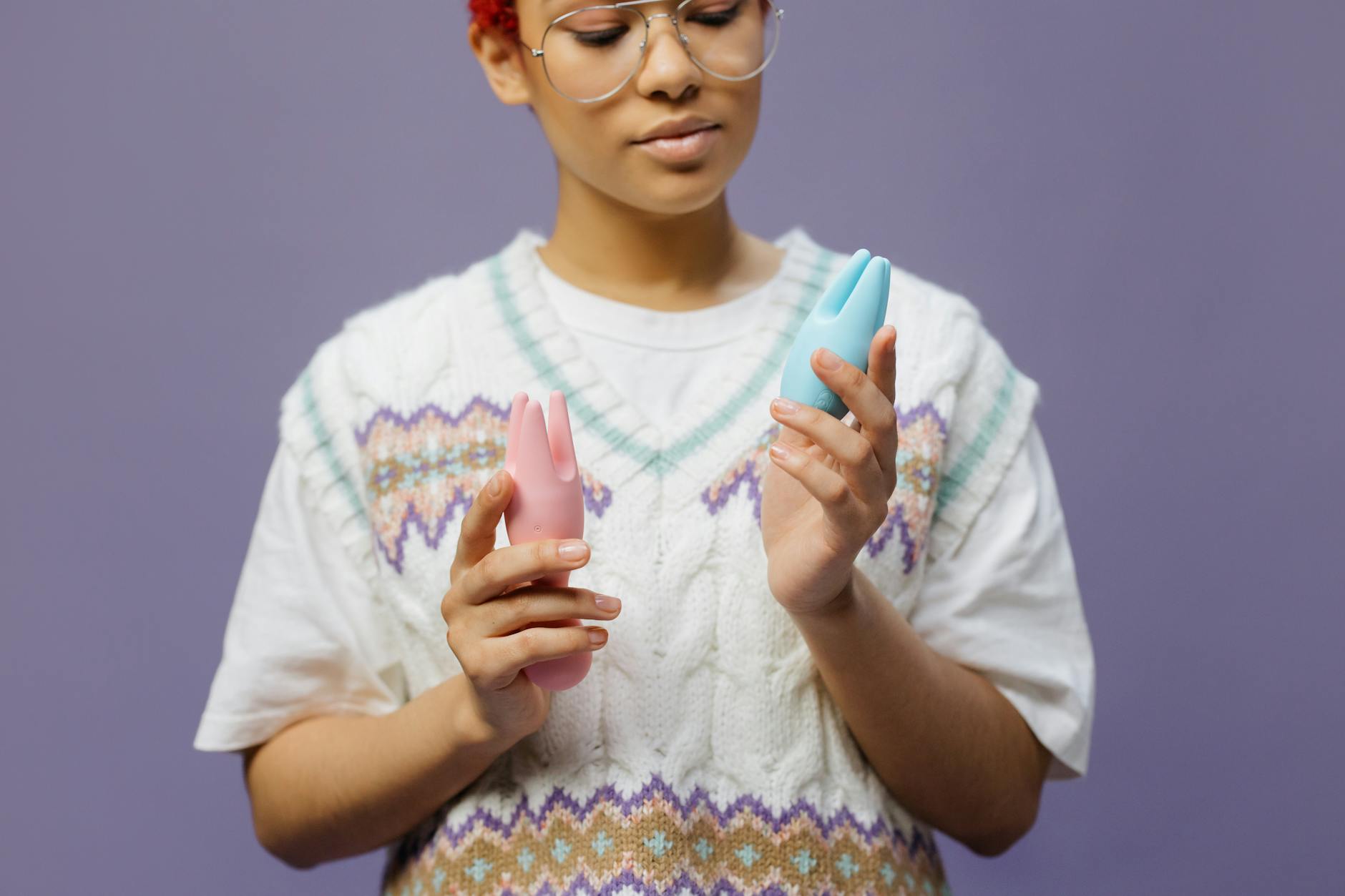
How Lemon Vibrators Help When Sensation Recovery Feels Slow After Fifty
After 50, sensation doesn't disappear. It recalibrates. Here's what actually changes, why lemon clitoral vibrators are different, and how to rebuild pleasure on your own timeline.
Sensation doesn't die at 50. It gets slower. That's different. Slower means you have time to rebuild it, layer by layer, without the time pressure that used to exist. Slower also means that when sensation returns, it often feels deeper than before.
I've worked with hundreds of clients navigating this shift, and the pattern is consistent. Around 50 or shortly after, people notice that the same touch that used to create immediate fireworks now requires more time, more intention, or a different kind of stimulation altogether. Most of them assume this is permanent. It isn't.
The reason lemon vibrators like those made by My Lem Toy matter for this specific moment is because they're engineered for sustained, focused stimulation rather than rapid percussion. When sensation is rebuilding, precision beats speed.
Three biological things happen around menopause and beyond. First, estrogen declines. This affects how quickly blood flows to the clitoris and surrounding tissues during arousal. Second, nerve sensitivity can shift. The clitoral nerves don't disappear, but the speed of signal transmission sometimes changes. Third, the pelvic floor muscles tend to become either tighter or more lax depending on activity and collagen loss, which changes how pleasure registers.
Here's what doesn't change: the clitoris has 8,000 nerve endings at 20 and still has 8,000 at 70. The brain's capacity for pleasure doesn't dim. The neural pathways for arousal remain intact.
What shifts is the relationship between stimulation type and response. Light, rapid vibration sometimes feels less effective because it doesn't translate as clearly to the nervous system. Sustained suction, air-pulse technology, and deeper frequency patterns do translate. That's why lemon clitoral vibrators, which rely on suction rather than traditional vibration, often feel like an upgrade for people rebuilding sensation in this phase of life.
A lemon sucker (the common name for lemon vibrators using suction technology) works differently than a standard vibrator. Instead of vibrating against tissue, it creates a gentle vacuum that draws the clitoris into the opening and then releases, creating a pulsing sensation that feels like sustained attention rather than surface stimulation.
When sensation is recalibrating, this matters. Suction engages deeper neural pathways because it mimics the sensation of oral sex, which research shows activates different brain regions than vibration alone. It also requires less direct pressure on the tissue itself, which means it works better on thinner, more sensitive tissue that's common after 50.
Clients often describe the shift as moving from "waiting for something to happen" to "feeling something build." That difference in the quality of sensation can be the gap between thirty minutes of effort and actual pleasure.
Inconsistent warm-up. After 50, arousal needs longer runway. Twenty-five to forty minutes is common. If you're expecting sensation in ten minutes, you're leaving before the signal even starts traveling. Lemon vibrators work better here because they're designed for sustained use without fatigue, so you can stay in that longer warm-up window without your hand or wrist getting tired.
Solo practice without the right tool. Sensation recovery happens faster with consistent, focused self-exploration than with waiting for a partner. Using lemon adult toys for solo sessions lets you learn your own recalibrated body without performance pressure. You're not waiting for someone else's rhythm. You're discovering what your nervous system actually responds to now.
Insufficient lubrication strategy. Tissue dryness isn't just about comfort. It's about conductivity. Sensation travels better through lubricated tissue because the friction changes. Water-based lube applied generously, fifteen to twenty minutes before stimulation, lets sensation build rather than get stuck at the surface.
Wrong toy design for tissue changes. Standard vibrators sometimes feel like static noise when tissue gets thinner or sensation pathways shift. Lemon clitoral vibrators, with their focused suction pattern, feel like signal instead of noise. The precision matters.
Start at pattern one. Most lemon vibrators have five to seven speed settings. Resist the urge to jump to pattern four because "that used to work." Your nervous system has recalibrated, and going too strong too fast shuts down the pleasure response rather than opening it up.
Apply lube first. Seriously, this isn't optional. Use a quarter-size amount and let it warm for two minutes.
Start the vibrator outside your body, on the outer labia, and spend five to ten minutes there. Let sensation wake up in the broader area before moving to the clitoris. This slow approach builds arousal gradually instead of demanding it instantly.
When you move to direct clitoral contact, go for three to five minutes at pattern one or two. Then pause. Rest for a minute. Notice what you're feeling. Arousal builds in stages now, not continuously. Respecting those stages is what makes sensation recovery possible.
Many people find that orgasm takes longer too, or feels different. Some describe it as more blended, less peaked. Some say it's actually more satisfying because it's not about getting from zero to sixty. That's not a loss. That's a recalibration.
Sensation recovery is partly neural and partly psychological. If you've spent years thinking sensation is supposed to be instant and easy, then fifty and slow feels like failure. It isn't. It's evolution.
One of the most important shifts I work through with clients is separating "my body doesn't work" from "my body works differently now." The first story leads to giving up. The second leads to curiosity.
Using a lemon vibrator isn't just about the physical sensation. It's about investing time and intention into pleasure. That investment is where the recalibration actually happens. Your nervous system learns that pleasure is worth attention. Your body learns that it can still produce sensation, just on a different timeline.
If you have a partner, this is also a moment to reset expectations together. If you've been expecting quickies, slow down. If you've been expecting traditional penetration to be the main event, explore other options. This phase often brings better intimacy precisely because it demands communication and creativity.
If sensation doesn't start returning after six to eight weeks of consistent solo exploration with appropriate tools, mention it to your doctor. Genitourinary syndrome of menopause (GSM) is real and treatable. So is hormonal deficiency that doesn't respond to lifestyle changes. A gynecologist trained in menopause medicine can run simple tests.
If pain accompanies sensation loss, don't wait. Pain changes the game and needs professional attention.
If you're on medications that affect sensation (many antidepressants and blood pressure meds do), ask your doctor if timing or dosage adjustments are possible. Sometimes a small change makes a huge difference.
Sensation recovery after 50 isn't a race. Some people notice shifts within weeks. Others take months. Both are normal. What matters is consistency, the right tools, and permission to explore at your own pace.
Lemon vibrators exist for exactly this reason. They're designed for the specific sensory shifts that happen in midlife and beyond. They're not a hack or a workaround. They're exactly the right tool for this particular moment.
Your pleasure didn't end at 50. It changed shape. Learning that shape is where the real pleasure begins.
Recovery typically starts within two to four weeks of consistent exploration with the right tool, though "recovery" isn't always linear. You might notice improvement in week one, a plateau in week three, then another shift in week five. Full recalibration often takes three to six months. The word "recovery" is slightly misleading though. You're not going back to how it was. You're moving forward to how it is now. That's often better.
Lemon suction vibrators engage deeper nerve pathways because suction mimics oral stimulation, which activates different neural responses than surface vibration. They also require less direct pressure, which matters when tissue is thinner after 50. They're designed for sustained, focused stimulation rather than rapid percussion. For someone rebuilding sensation, that precision is the difference between feeling nothing and feeling everything.
Yes, but start with the lowest setting and shortest sessions. If you've had pain, your nervous system is primed to expect it, so go slowly and stop immediately if anything feels uncomfortable. Suction toys often feel less triggering than vibration for people with pain history because they're gentler on the tissue. Work with a pelvic floor physical therapist if possible. They can help you rebuild sensation safely.
Completely normal. After 50, orgasms often feel different in shape. Some people describe them as broader and less peaked. Others say they're more blended across the body instead of concentrated in one spot. They might take longer to build, and that's actually an advantage. A slower orgasm gives you more time to feel it, which often makes it more satisfying. Different doesn't mean worse.
First, check your warm-up time. Most people underestimate this. You probably need thirty to forty minutes, not ten. Second, check your lubrication strategy. Thicker, longer-lasting lubes (hyaluronic acid or premium water-based options) make a difference. Third, lower your pattern speed. What worked at 35 might not work at 55. Start at pattern one and give it real time. If you've done all this for six weeks and nothing changes, see your doctor. Sometimes medication or topical hormone therapy makes sensation return quickly.
Both, but start solo. Solo exploration gives you privacy to learn your recalibrated body without performance pressure. You can take twenty minutes in pattern one without worrying about your partner's timeline. Once you understand what works, you can bring that knowledge into partnered time. Partners often feel relieved that you've done this work because it takes pressure off them to "make it happen."
Sensation after 50 isn't a downward slope. It's a recalibration. Lemon clitoral vibrators work for this specific moment because they deliver sustained, focused stimulation that matches how your nervous system actually works now. Patience, the right tool, and consistent practice rebuild pleasure faster than most people expect. Your best sexual years might actually be ahead of you.
If you're ready to explore this shift with intention, check out what My Lem Toy offers. Or if you have questions about your specific situation, reach out to us. We're here to help you navigate this transition with confidence and pleasure.